History
The History of Burley on the Hill
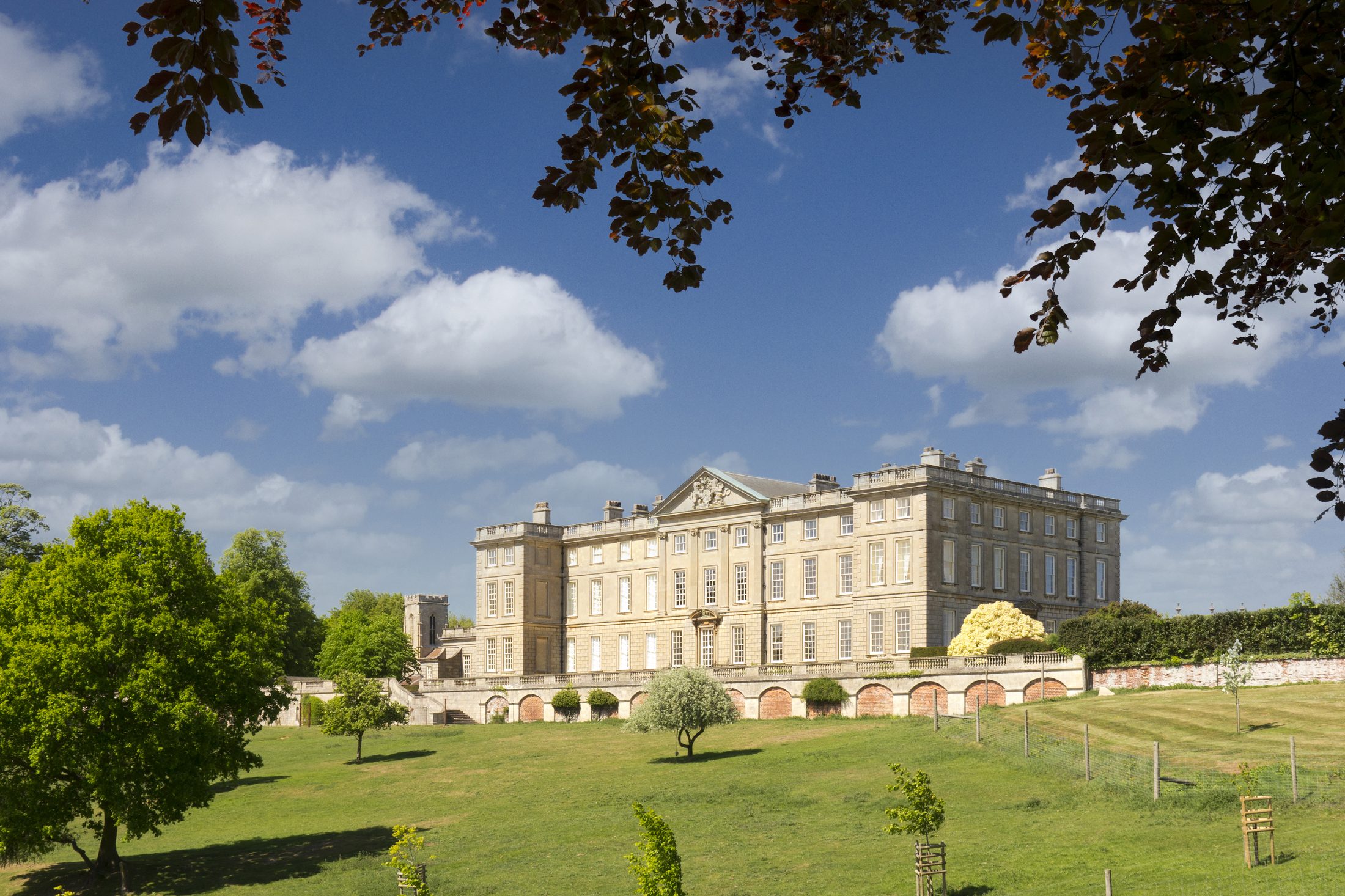
The Domesday Book of 1086 mentions this hilltop site, then held by a Saxon named Ulf, and a house has stood here for centuries since. In 1603 King James VI of Scotland stayed at Burley on his progress south to be crowned James I of England. Later in his reign, Burley was sold by Baron Harington of Exton to the King's favourite, George Villiers, Duke of Buckingham.
Buckingham's Burley
Buckingham in turn entertained King Charles I and Queen Henrietta Maria at Burley. The entertainment included the first performance of Ben Jonson's masque The Gypsies, and Jeffrey Hudson, the famous dwarf known as "the smallest man in the smallest county in England," emerged from a pie on the table.
Following Buckingham's assassination, the house passed to his son, who joined the Royalist cause on the outbreak of the Civil War. Burley was taken by Cromwell's Roundheads and used as a garrison for their troops. Fearing the house might be captured by Royalists, the Parliamentarian soldiers set fire to it in 1644. Only the stables on the east side of the Great Courtyard survived.
The Finches Rebuild
In 1694, following the Duke of Buckingham's bankruptcy, the property was sold to Daniel Finch, 2nd Earl of Nottingham and 7th Earl of Winchilsea. The remains of the old house were demolished in 1695 and work began on the present house. The architect was probably the Earl himself, assisted by John Lumley of Northampton, in a fashionably Palladian style, with some ceilings attributed to Sir Christopher Wren.
Construction took almost thirty years and, like so many projects, ran far over its initial budget of £25,000, eventually costing more than £80,000. That overrun forced the sale of Kensington House, the Earl's London property, to King William III for £18,000. Pearl Finch's history of the family, published in 1901, records 180 workmen employed on the site. The house is faced in Clipsham stone, while the softer Ketton stone was used for the colonnades linking it to the stables and coach house.
Lanscroon and the Fire of 1908
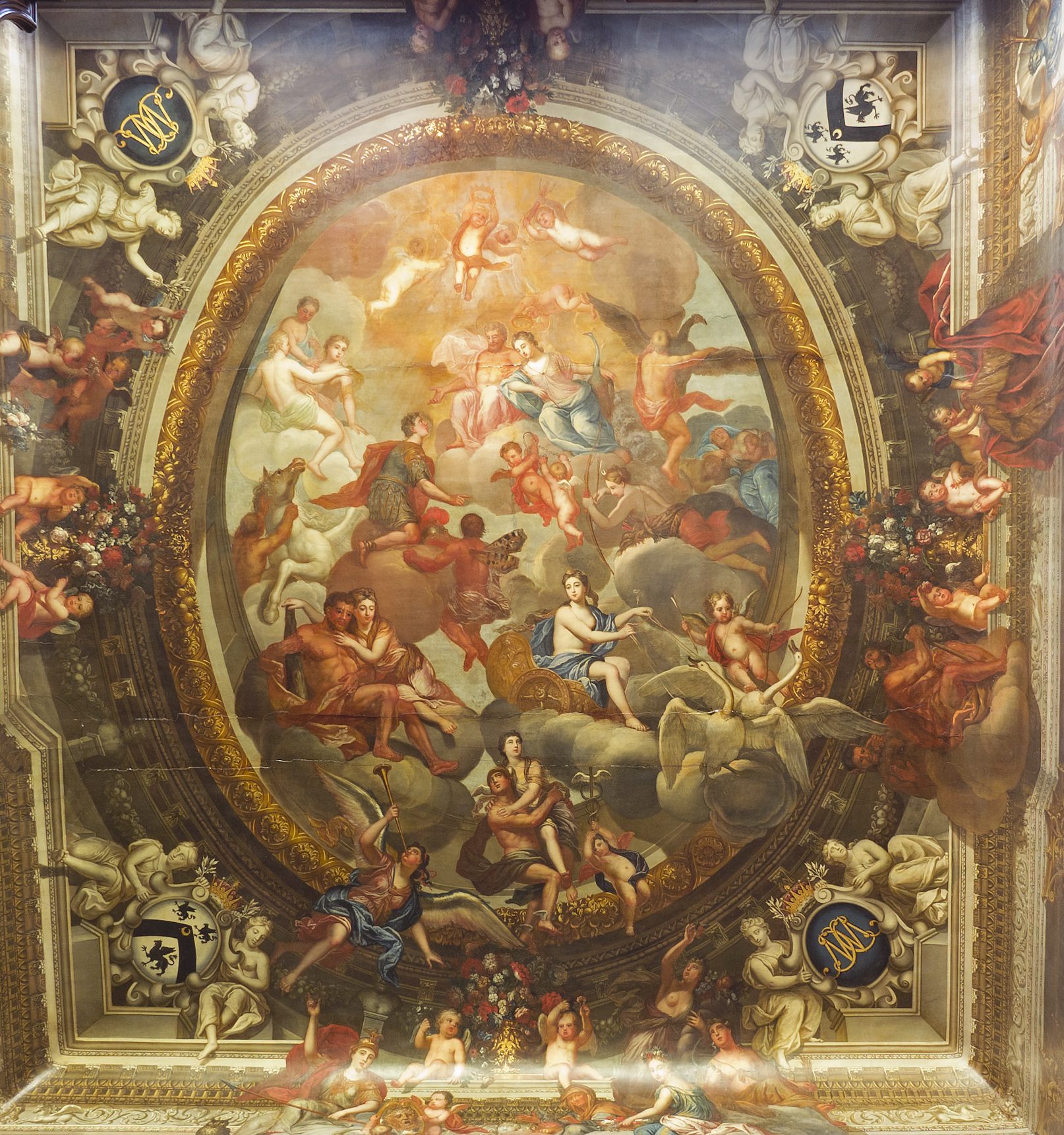
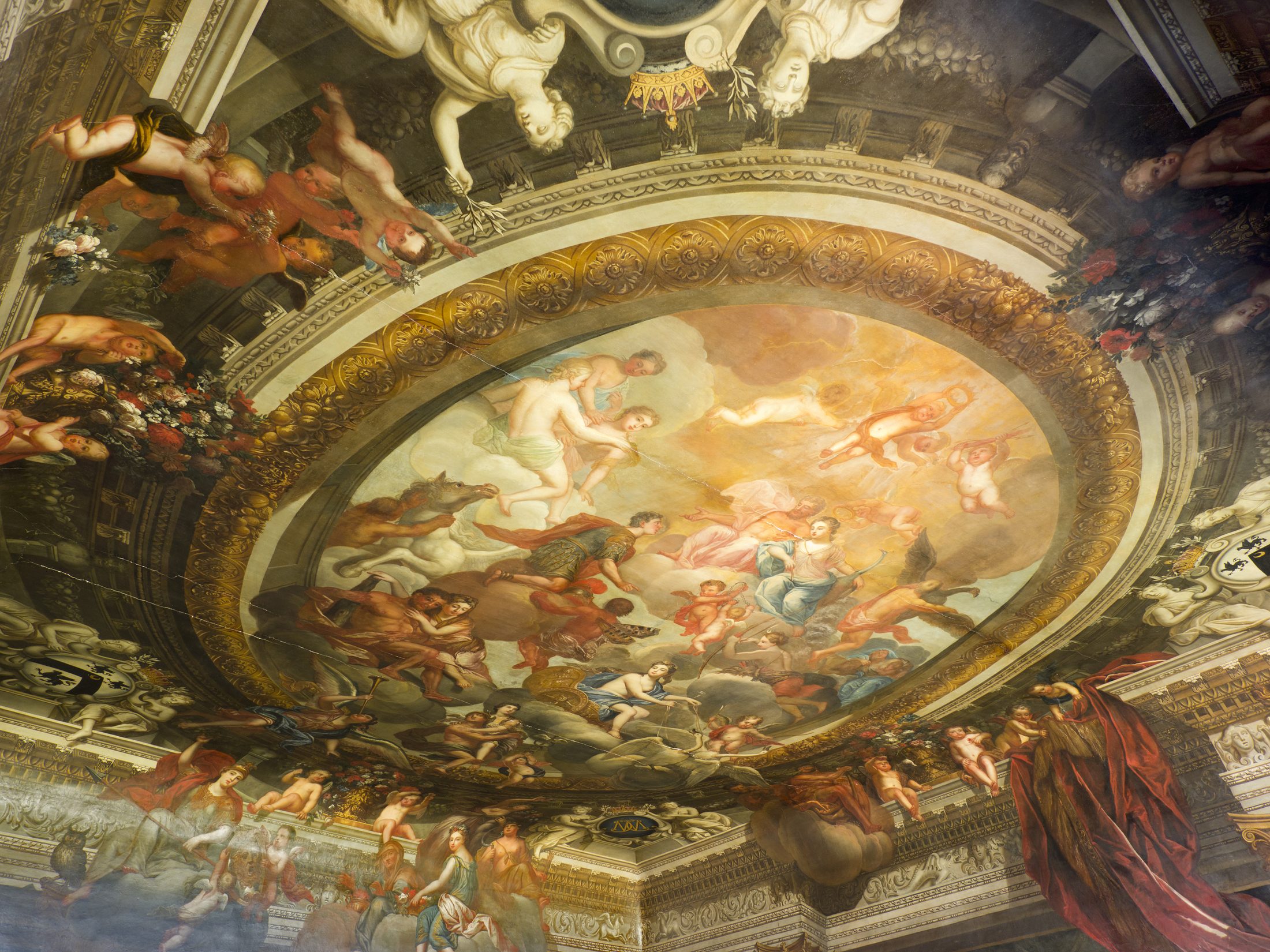
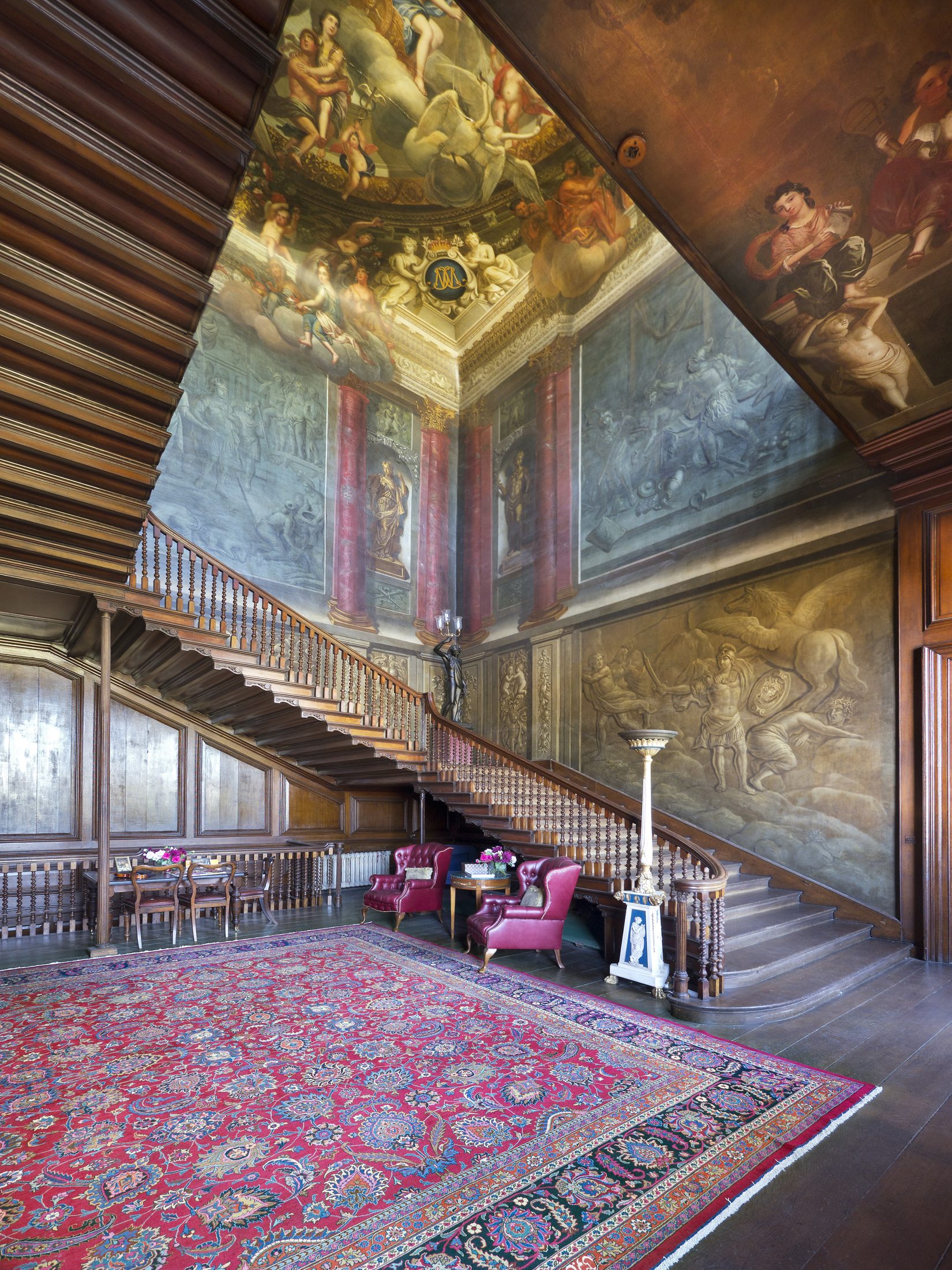
Gerard Lanscroon, the Flemish master who had decorated Windsor Castle and Hampton Court Palace under Antonio Verrio, was employed between 1708 and 1712 to decorate the Great Stair and the Ball Room. In 1908 a disastrous fire broke out during a party attended by a young Winston Churchill, destroying the interior of the west half of the house, including the Ball Room. The Great Stair and Library survived without damage, painted walls, ceiling and all.
Lanscroon's work on the Great Stair depicts the story of Perseus and Andromeda. The Gorgon Medusa features, as does Pegasus, one of the Earl of Nottingham's crests. The ceiling shows Mars rising into the sun and Juno driving a chariot drawn by swans.
The house is Grade I listed; see Historic England's list entry for the statutory description.
Repton and the Grounds
Around 1795, the 4th Earl of Nottingham employed Humphry Repton to re-landscape the grounds. Repton followed Capability Brown's idea of letting nature in, sweeping away two of the three terraces on the south front and leaving only the Great, or South, Terrace, with its views over the deer park, Burley Wood, and Rutland Water.
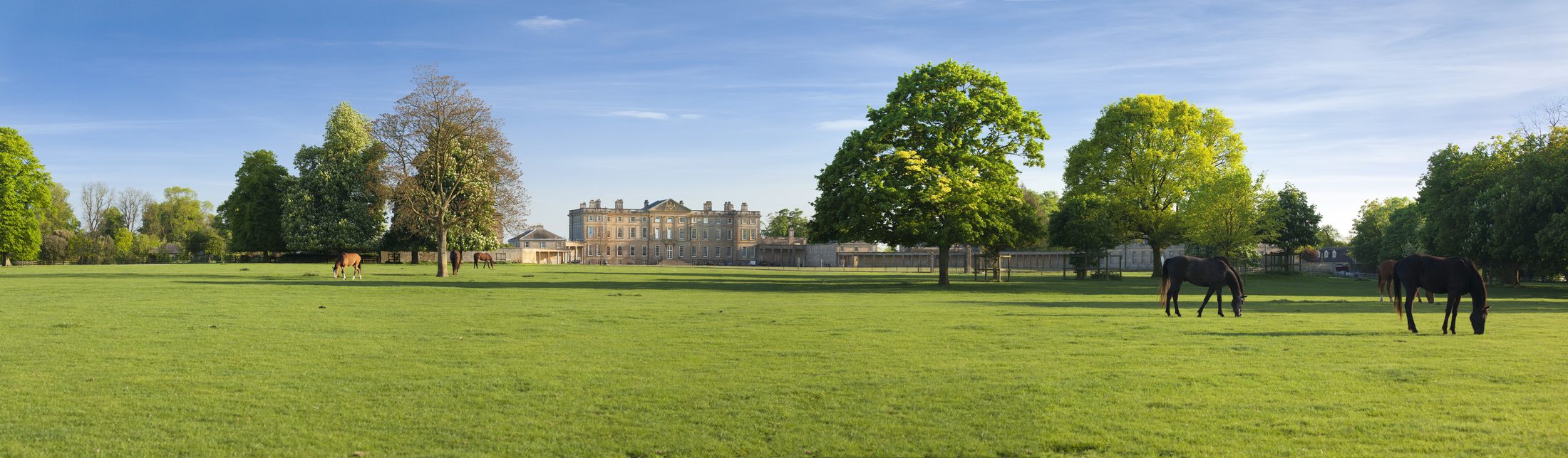
From the Finches to Today
On the 4th Earl's death, the estate passed to his illegitimate son, George Finch, and continued down the Finch family until the late 1930s, when Colonel James Hanbury inherited it. It was sold in 1988 to Asil Nadir, who returned to Cyprus; a couple of years later it returned to Joss Hanbury, who worked with the architect Kit Martin on a sympathetic vertical division of the mansion into a number of freehold houses.
The Great Stair and Library had been conceived as two separate dwellings from the start. It's the largest and grandest house within the mansion, and the only one with its original State Rooms intact.